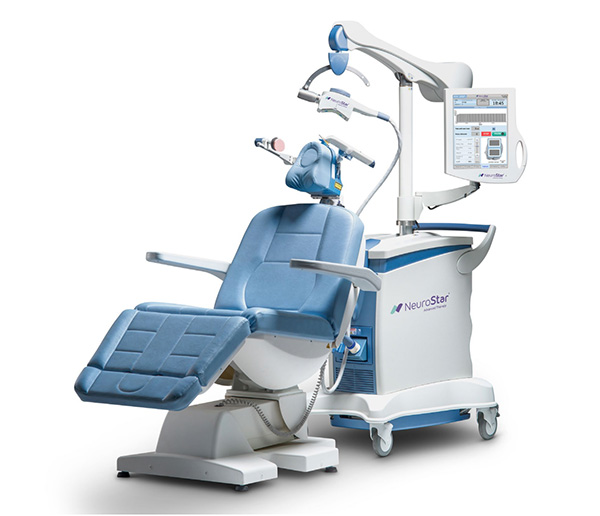
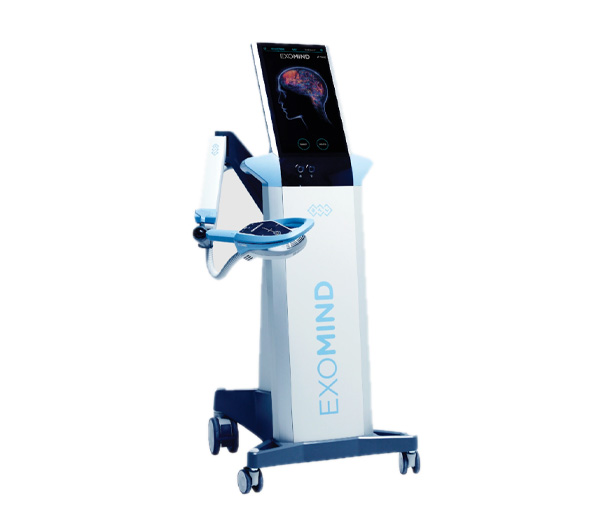
We offer two different brands of Transcranial Magnetic Stimulation (TMS), each designed to address specific clinical needs and tailored to support individualized treatment plans.
NeuroStar rTMS is a traditional, widely used outpatient treatment delivered over four to six weeks with 36 sessions typically scheduled five days per week. It is covered by many insurance plans for Major Depressive Disorder and is also commonly covered for Obsessive Compulsive Disorder when clinical criteria are met, though authorization requirements vary by plan. NeuroStar is often chosen by patients who want an insurance supported option and whose schedules allow for consistent weekday appointments.
EXOMIND rTMS uses an accelerated treatment model designed to reduce the overall number of sessions. Treatment follows the Select 2 SuperBoost protocol and consists of six sessions, typically scheduled one session every seven to ten days. EXOMIND is not covered by insurance and is offered as a self pay treatment, with payment plan options available. It is often chosen by patients who want a shorter treatment timeline, have difficulty attending frequent visits, or are comfortable with self pay arrangements.
Transcranial Magnetic Stimulation, or TMS, is a non invasive treatment used for Major Depressive Disorder and other mood related conditions when symptoms have not adequately improved with medication or psychotherapy alone. TMS uses targeted magnetic stimulation to activate specific brain regions involved in mood regulation and emotional processing.
TMS does not require anesthesia, does not involve medication, and does not impair daily functioning. Patients remain awake during treatment and can return to normal activities immediately afterward.

TMS delivers focused magnetic pulses to areas of the brain associated with depression and related disorders. These pulses encourage healthier neural signaling within mood related brain networks. Over the course of treatment, this repeated stimulation may help reduce symptoms and improve overall functioning.
TMS is delivered in structured treatment courses. The structure and financial considerations vary depending on the system used.
If you are interested in TMS therapy, scheduling a consultation provides an opportunity to talk through your treatment options in detail, review your history and goals, and determine which TMS approach is the best fit for you.